
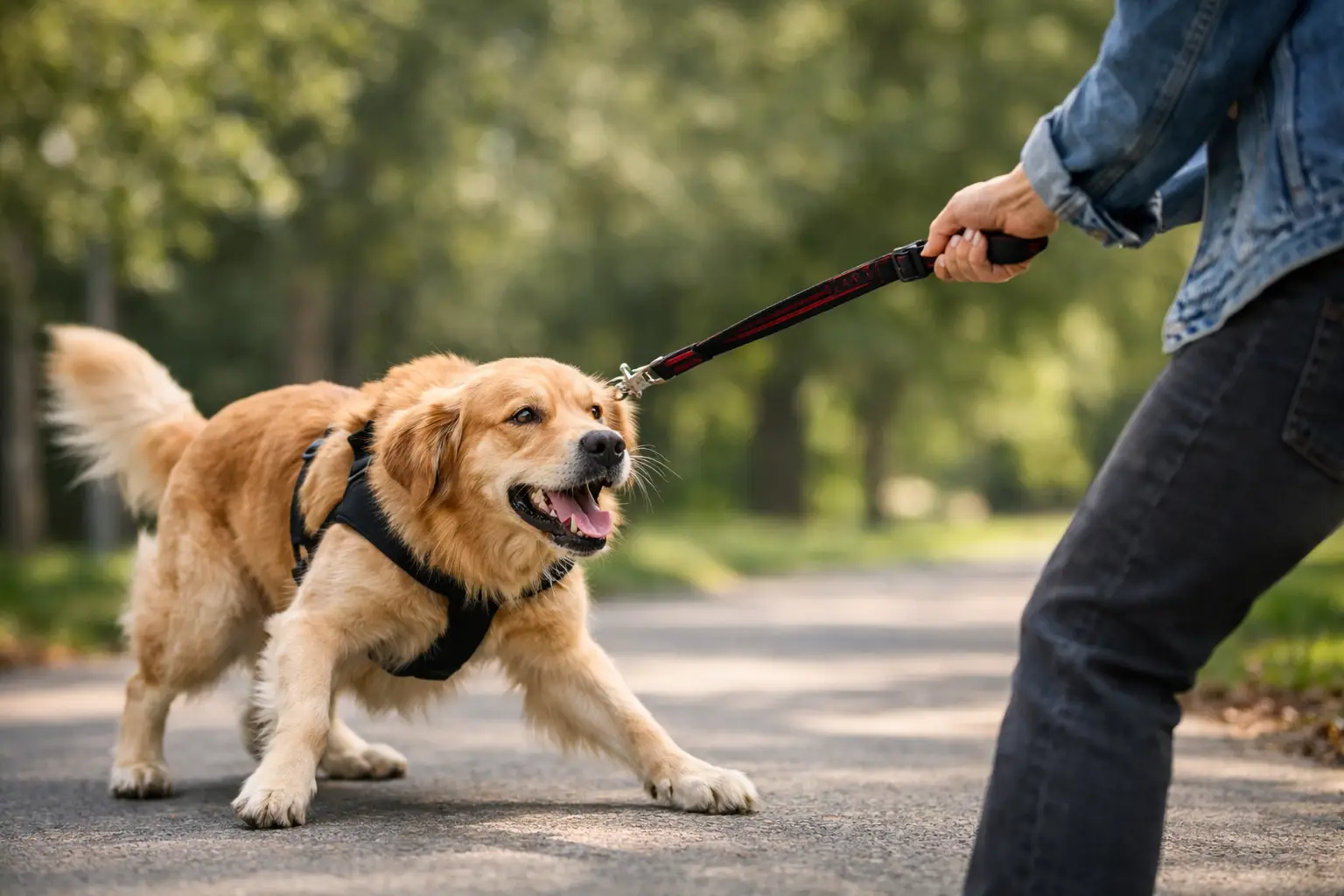
Your dog sees the leash, gets excited, and the walk turns into a full-body tug-of-war before you even reach the sidewalk. If you are searching for how to stop leash pulling dogs, the fix is not just buying a new tool or correcting harder. It is building clear rules, better timing, and enough repetition that your dog understands walking with you is not optional.
Leash pulling is one of the most common problems dog owners deal with, and it shows up in every type of dog. Puppies pull because they are curious and impulsive. Adult dogs pull because it has worked for them for a long time. Strong, high-drive dogs pull because they are physically capable of dragging a person where they want to go. Nervous or reactive dogs may pull because they are trying to create distance or get to a trigger faster. The reason matters, because the right solution depends on what is driving the behavior.
Why dogs pull on the leash
Most dogs pull for one simple reason – pulling gets them somewhere. It moves them toward smells, people, dogs, grass, and motion. If your dog tightens the leash and still reaches what they want, the pulling is being rewarded whether you mean to reward it or not.
Excitement is a big factor, but it is not the only one. Some dogs lack structure and have never been taught what leash pressure means. Some have plenty of obedience indoors but lose all focus once the environment gets interesting. Others are not just distracted. They are overstimulated, anxious, or reactive, and the pulling is part of a bigger behavior problem.
That is why quick tips alone often fall short. If your dog pulls mildly at the start of a walk, a few handling changes may help fast. If your dog lunges, panics, or ignores you completely outside, you need a more complete training plan.
How to stop leash pulling dogs in real life
The goal is not just a loose leash for 20 feet in your driveway. The goal is a dog that can walk with control in everyday life, around real distractions, with you making clear decisions and your dog following through.
Start with the leash itself. Keep it short enough that your dog cannot build momentum, but not so short that you create constant tension. Many owners accidentally teach pulling by walking on a tight leash all the time. Your dog stops feeling the difference between neutral leash pressure and pulling pressure, so the leash becomes background noise.
Then look at your own handling. If you keep moving while your dog forges ahead, you are reinforcing the behavior. If you repeat cues over and over without follow-through, your dog learns your words are optional. Good leash training is built on clarity. The dog moves with you, not despite you.
A useful starting point is changing direction the moment your dog commits to pulling. Do not wait until they are fully leaning into the leash. The timing matters. As soon as the leash gets tight, turn and move the other way with purpose. When your dog catches up and the leash relaxes, continue. This teaches that pulling makes progress stop, while staying connected to you keeps the walk going.
For some dogs, that alone creates improvement. For many others, especially dogs with a long history of dragging their owners, you will need more structure than that.
Train before the walk, not only during it
One of the biggest mistakes owners make is trying to teach everything in the middle of an exciting walk. That is like teaching a child to focus in the middle of an amusement park. It can be done, but it is not where you should start.
Begin in a lower-distraction setting. Your driveway, backyard, garage, hallway, or quiet street is enough. Teach your dog that leash pressure means to yield and reconnect, not push through it. Teach a clear heel or walking position if that is part of your goal. Reward attention, correct confusion quickly, and keep sessions short enough that your dog can succeed.
This matters because dogs do not generalize well. A dog that walks nicely in the kitchen may still pull hard at the park. That does not mean they are stubborn. It means they need training in layers. First calm space, then mild distractions, then busier environments, then real-world repetition.
How to stop leash pulling dogs without creating more frustration
Many owners swing between two extremes. They either let the dog pull and hope it gets better with age, or they become frustrated and overcorrect without teaching the dog what to do instead. Neither approach produces reliable walking.
Your dog needs both accountability and direction. If the leash goes tight, there should be an immediate consequence such as stopping progress or changing direction. But your dog also needs to know how to get back into the right answer. That usually means reconnecting with you, moving into position, and maintaining a loose leash.
Rewarding the right moments is just as important as interrupting the wrong ones. Praise, food, movement forward, and access to the environment can all be rewards. What works best depends on the dog. A food-motivated puppy may improve quickly with marker training and small treats. A high-drive adolescent may care more about being allowed to move. A reactive dog may need distance from triggers as the reward for choosing calm behavior.
The trade-off is this: if you rely only on rewards without structure, many dogs will work nicely until the environment becomes more valuable than the reward. If you rely only on correction without teaching and reinforcement, many dogs will become confused, resistant, or shut down. Balanced, consistent training tends to hold up better in the real world.
Equipment can help, but it is not the answer
Owners often ask which collar, harness, or leash will stop pulling fastest. The honest answer is that equipment can improve communication, but no tool replaces training.
Some dogs do better on one setup than another, especially when size, sensitivity, and behavior issues are involved. But the wrong expectation is thinking a tool will do the training for you. If your dog never learns leash manners, they often become dependent on the equipment or learn to fight through it.
The better question is whether your equipment allows clear, safe communication. If it does, and you are using it correctly, it can support training. If it does not, or if your dog is still overpowering you, becoming frantic, or rehearsing bad habits, it is time to change the training approach rather than keep shopping for gear.
When pulling is really reactivity, fear, or overstimulation
Not all leash pulling is simple excitement. If your dog stiffens, scans, whines, lunges, barks, or explodes around other dogs, people, bikes, or cars, this is no longer just a loose-leash issue. The leash pulling is tied to emotion.
In that case, you need more than walking drills. You need behavior modification, better threshold management, and controlled exposure work. Trying to force a reactive or fearful dog through crowded walks usually makes the problem worse. The dog is not refusing to listen just to be difficult. They are often too escalated to learn well in that moment.
This is where professional training makes a major difference. A structured plan can teach the dog how to stay responsive under pressure while helping the owner recognize when to challenge the dog and when to create space. At Sit Means Sit Dog Training Austin, that real-world transfer matters because the goal is not a dog that behaves only in a lesson. It is a dog you can live with confidently.
What dog owners should expect from progress
Leash pulling usually improves in stages, not all at once. First, the dog starts checking in more. Then the pulling becomes less constant. Then recovery gets faster after distractions. Finally, the dog can hold good behavior for longer stretches in more places.
That process is normal. A dog with months or years of rehearsal will not become perfect in three walks. But with good timing, consistency, and the right level of accountability, most dogs can make meaningful progress faster than owners expect.
The key is not making the walk easier only for today. It is building a standard your dog understands every day. If you are strict on Monday and casual on Tuesday, your dog learns to gamble. If you are clear every time the leash goes on, your dog starts to understand the job.
If your dog is strong, distracted, reactive, or simply not improving despite your effort, get help early. The longer pulling is practiced, the more ingrained it becomes. Good training shortens that cycle and gives you a dog that can walk calmly in the places that matter most.
A better walk changes more than the walk itself. It gives you more control, more safety, and more freedom to enjoy life with your dog.