
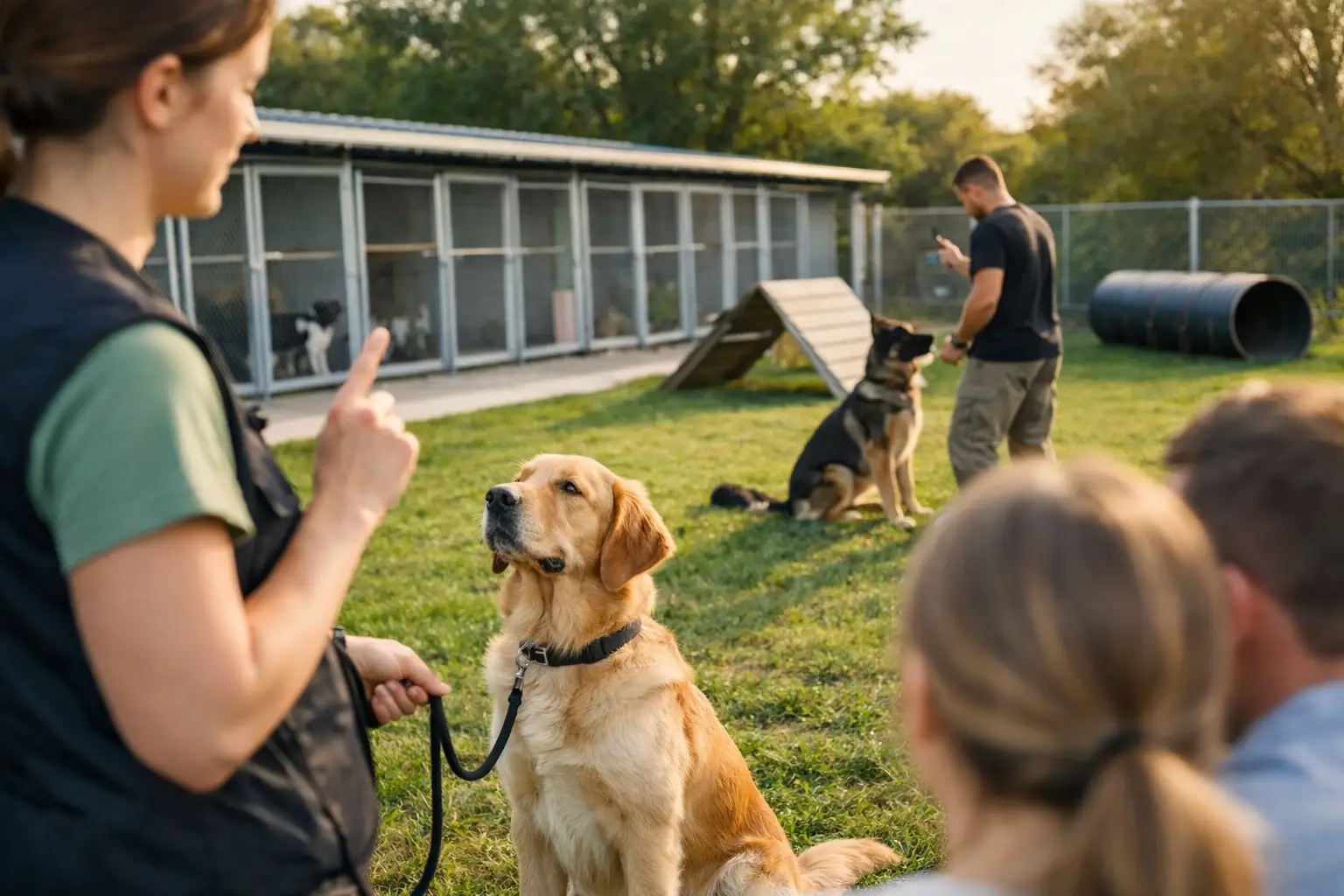
When people search for board and train programs near me, they usually are not casually browsing. They are trying to solve a real problem. Maybe their dog is pulling hard on walks, ignoring commands, jumping on guests, fighting the crate, or reacting to every dog that passes by. Maybe they love their dog and feel stuck. That is exactly where the right training program can make a difference.
A board and train program gives your dog focused, daily training in a structured environment. For many owners, that means faster progress than trying to squeeze training into an already packed schedule. But not all programs are built the same, and choosing the right one matters just as much as deciding to get help in the first place.
What board and train programs near me should actually offer
At the most basic level, board and train means your dog stays with professional trainers for a period of time while working on obedience, manners, and behavior goals. That sounds simple. The difference is in how the program is designed, how clearly expectations are explained, and whether the results transfer back to your home.
A strong program should do more than teach a dog to respond in a training building. It should prepare the dog to listen around distractions, in everyday routines, and with the people who matter most. That means the owner has to be part of the process. If a program promises results but does not include clear handler coaching, transition sessions, or follow-up support, that is a red flag.
Training is never just about the dog. It is about communication, consistency, and practical handling skills. Your dog can make excellent progress in a professional setting, but lasting results depend on what happens once your dog comes home.
Is board and train the right fit for your dog?
For many families, yes. Board and train can be an excellent option for busy professionals, households with young kids, first-time dog owners, and people dealing with behavior issues that feel too big to solve alone. It is also useful for dogs that need immersive repetition, structure, and a cleaner learning environment than they are getting at home.
That said, it is not automatic magic. Some dogs need behavior modification, some need foundational obedience, and some need a hybrid approach that combines intensive training with lessons for the owner. Puppies may benefit from early development and structure, while adolescent dogs often need consistency and impulse control. Dogs with fear, anxiety, or aggression can absolutely improve, but they need a program with real experience in behavior work, not just basic obedience.
The best answer is usually based on your dog’s temperament, your goals, and how much support you will need after the program ends.
What to ask before choosing a program
If you are comparing board and train programs near me, ask direct questions. A reputable trainer should be able to explain what your dog will learn, how progress is measured, and what kind of owner education is included.
Start with the daily structure. How often is the dog trained each day? What does the dog do between sessions? Are they working only in a kennel environment, or are they being trained in real-life situations with distractions, handling practice, and lifestyle exposure?
Then ask about the handoff. Do you receive go-home lessons? Are there follow-up sessions, group classes, or reinforcement options? Can the trainer explain how they help owners maintain the training in daily life? This part matters because a polished dog in training is not the same thing as a reliable dog at home.
You should also ask whether the program is customized. Dogs do not all come in with the same needs. A dog that drags an owner down South Congress has different goals than a dog that barks and lunges at every passing dog, and both are different from a six-month-old puppy that has not learned boundaries yet.
Results matter, but so does the process
Every owner wants results. That is reasonable. But smart shoppers also look at how those results are built.
A good board and train program should be structured, clear, and consistent. Trainers should be able to describe the behavior goals in plain language. Sit. Down. Place. Loose-leash walking. Recall. Door manners. Calm behavior around guests. Better responsiveness around distractions. For behavior cases, they should explain what improvement realistically looks like and where management still plays a role.
This is where honesty matters. No ethical trainer should tell you every dog becomes perfect in a fixed number of days. Some dogs improve quickly. Others need longer timelines, more owner practice, or continued reinforcement after the initial stay. Reliable training companies explain both the potential and the work involved.
What a local Austin family should look for
If you are in Austin or the surrounding areas, environment matters more than many owners realize. A dog that listens in a quiet yard may fall apart at Zilker, on a busy trail, near restaurant patios, or around neighborhood distractions. That is why training should not live in a bubble.
Look for a program that understands real-world dog ownership in Central Texas. That includes heat, distractions, active neighborhoods, outdoor social settings, and the everyday unpredictability of family life. The goal is not just obedience in ideal conditions. The goal is control you can actually use.
This is where a training-as-you-live approach stands out. Dogs need to practice the right behaviors in ways that connect to your actual routines. Owners need to know how to reinforce those behaviors when the trainer is not standing next to them.
Red flags to avoid in board and train programs near me
Some warning signs are easy to miss when you are eager for help. Be careful with vague promises, especially if a company avoids specifics about what is taught or how follow-up works. Be cautious if there is little emphasis on owner involvement. Board and train should not leave you with a mystery system and a dog you do not know how to handle.
Another red flag is one-size-fits-all packaging with no evaluation. A professional trainer should want to assess your dog before recommending a program. That is especially true for behavior cases, where history, triggers, home routines, and safety concerns all affect the training plan.
Also pay attention to experience. Handling basic obedience is one thing. Working with reactivity, fear, aggression, or severe distraction issues is another. Ask how many dogs they have trained and what kinds of cases they regularly handle.
What success looks like after the program
A successful board and train experience should leave you with more than a better-behaved dog. It should leave you with clarity. You should understand what your dog knows, how to reinforce it, what standards to keep, and where to ask for help if you hit a bump.
That is why ongoing support matters. Dogs live in changing environments. New distractions come up. Routines shift. Families travel, move, add kids, host guests, and test boundaries. Training that lasts is training that has a support system behind it.
For many owners, the best program is not simply the shortest or the cheapest. It is the one that creates practical, repeatable results and gives them the confidence to maintain those results at home. That is the real value.
Companies with long-term proof points tend to stand out here. Experience matters. So does a track record of working with all breeds, ages, and behavior levels. Sit Means Sit Dog Training Austin, for example, has helped more than 10,000 dogs over more than 12 years by pairing structured training with owner coaching and real-world reinforcement.
The best next step
If you are searching for board and train programs near me, do not just look for availability. Look for fit. Look for a program that takes your dog seriously, asks good questions, explains the process clearly, and prepares you for life after the stay is over.
The right training program should make your life easier, your dog safer, and your relationship stronger. When a trainer can show you how the work will carry into walks, guests, outings, and daily routines, you are not just paying for obedience. You are building a dog you can actually live with and enjoy.