
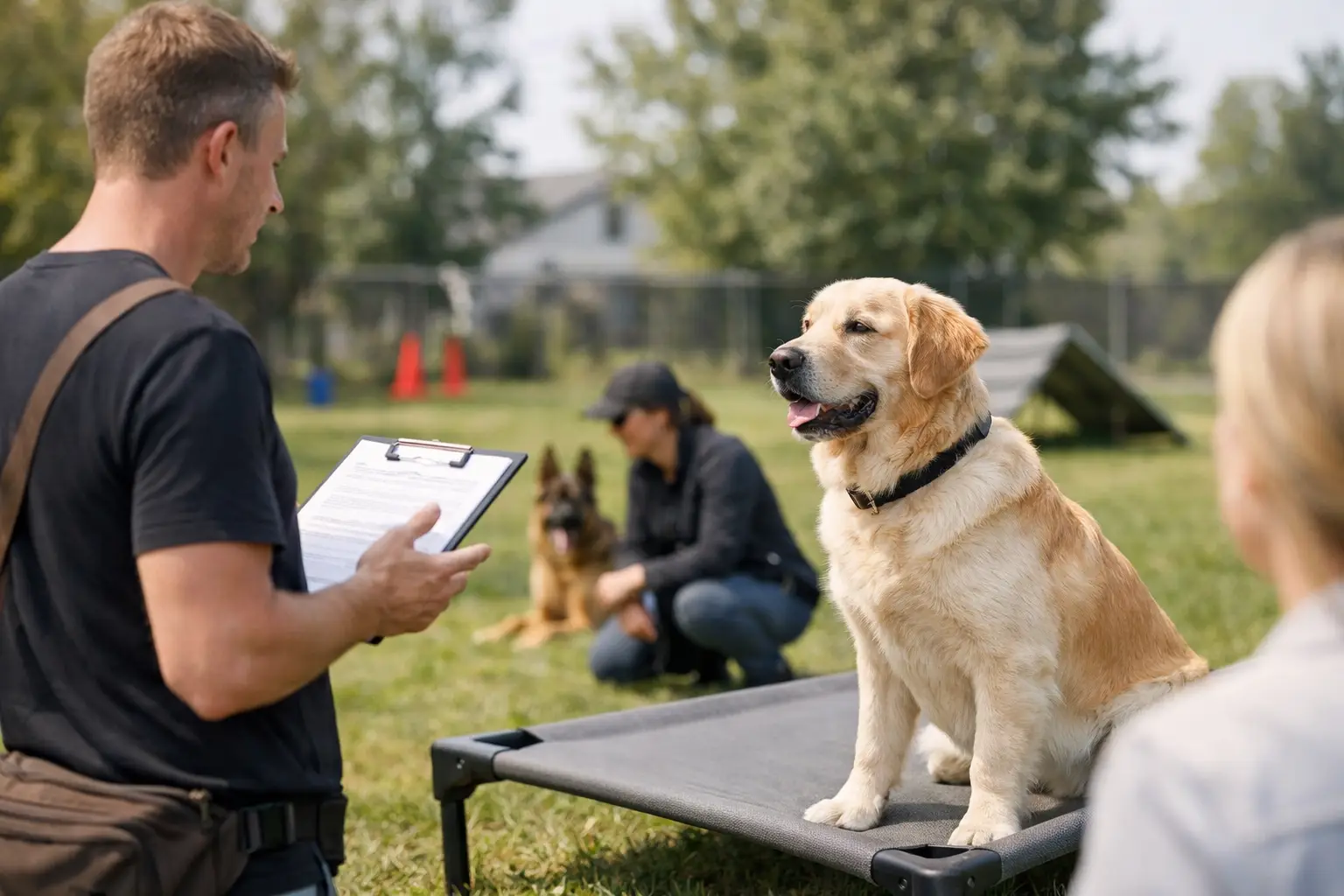
Sticker shock is common when owners first look up board and train programs cost. One program might look surprisingly affordable, while another comes in several times higher. The difference usually is not just the dog sleeping at a facility. It is the amount of hands-on training, the trainer’s experience, the behavior goals, the length of stay, and how well the program prepares you to maintain results at home.
If you are comparing options in Austin, the smartest question is not simply, “What does it cost?” It is, “What am I actually getting for that price?” A lower number can look attractive until you realize it covers very little follow-up, limited owner coaching, or no real plan for transferring training into daily life.
What board and train programs cost depends on
Board and train pricing varies because dogs arrive with very different needs. A young dog learning leash manners and place training does not require the same level of work as a dog with reactivity, anxiety, or aggression. Program price usually reflects the time, structure, and trainer skill needed to create measurable change.
Length is one of the biggest factors. A short stay may focus on foundation work like recall, loose leash walking, markers, impulse control, and basic obedience. Longer programs often address bigger lifestyle goals, including off-leash reliability, public behavior, distraction proofing, or behavior modification. More days usually means more repetitions, more exposure to different environments, and more opportunities to build consistency.
Trainer expertise also matters. A program run by experienced professionals with a proven system, thousands of dogs trained, and a strong track record of owner results will typically cost more than a basic boarding setup with a little training added in. That higher price often reflects better program design, more accountability, and stronger follow-through.
Typical price ranges for board and train
In many markets, board and train programs cost anywhere from around $2,000 to $6,000 or more, depending on scope. Puppies or basic obedience cases may fall toward the lower end. Advanced programs, longer stays, and behavior cases often land higher.
That said, broad price ranges can be misleading if you do not know what is included. One two-week program may include daily training, owner lessons, group class reinforcement, and take-home support. Another may cover little beyond kennel time and a few sessions. On paper, both are board and train. In practice, they are not the same product.
For that reason, price should always be evaluated next to outcomes. If your dog comes home with commands but you do not know how to reinforce them, the value drops fast. The real goal is not a dog who performs for the trainer. It is a dog who listens to you in real life.
Why some programs cost more than others
A quality board and train program is labor-intensive. Trainers are not only teaching obedience cues. They are shaping habits, building clarity, working through distractions, and creating repeatable behaviors under real-world pressure. That takes time and skill.
Behavior modification drives cost up even more. Dogs dealing with aggression, fear, severe leash reactivity, separation-related issues, or a history of unsafe behavior need a more careful approach. The trainer has to assess triggers, manage risk, create structure, and progress at the dog’s pace without skipping steps. Those cases require more expertise and more coaching for the owner as well.
Location can influence price too. In a city like Austin, operating costs, staff quality, and facility standards all play a role. But the strongest programs are not charging more just because they can. They are charging for a system that is built to produce dependable results and support the owner after the dog goes home.
What should be included in the cost
The most valuable board and train programs are not just about the stay. They include a clear transfer process so training works beyond the facility. That usually means owner lessons, follow-up sessions, and reinforcement opportunities after the program ends.
When evaluating price, look for details such as how many training sessions your dog gets per day, what behaviors are covered, whether the training happens in real-life environments, and what support you receive afterward. Group classes, private go-home lessons, and continued access to trainers can make a major difference in long-term success.
This is where many owners either save money or waste it. A cheaper program with little owner education often leads to backsliding, frustration, and eventually paying for more training later. A stronger program may cost more upfront, but if it teaches both dog and owner how to live the training every day, it usually creates better value.
Board and train vs. private lessons
Some owners are deciding between board and train and one-on-one lessons, so cost becomes part of a bigger decision. Private lessons can be an excellent fit when the dog’s issues are manageable, the owner has time to practice consistently, and the main need is guidance rather than intensive structure.
Board and train is often the better choice when time is limited, the dog needs a stronger reset, or the behavior is serious enough that daily professional reps matter. Busy professionals, families juggling a full schedule, and owners facing reactivity or major obedience gaps often choose this route because it builds momentum faster.
That does not mean board and train is automatically better. It means it is different. You are paying for immersion, consistency, and concentrated work. If your dog needs that level of support, the cost can make sense. If your dog simply needs a few skill adjustments and you are ready to do the training yourself, private lessons may be the more efficient investment.
How to tell if the price is worth it
A good program should be able to explain exactly what success looks like. Not in vague promises, but in practical terms. Will your dog learn reliable obedience? Will the trainer address jumping, pulling, reactivity, or lack of focus? Will you get coached on how to maintain results at home, in your neighborhood, and around distractions?
You should also ask how progress is measured. Strong trainers do not guess. They assess the dog’s starting point, set realistic goals, and explain what can be achieved within a given timeframe. They are honest about trade-offs too. Some dogs need longer stays. Some behaviors improve significantly but still require reinforcement after the program. Straight answers are a good sign.
Reputation matters here. A company with years of experience, high training volume, and a long record of helping dogs across ages, breeds, and behavior challenges is usually a safer investment than a program that sounds good but cannot demonstrate consistent results. At Sit Means Sit Dog Training Austin, that kind of consultation-first approach helps owners choose the right fit instead of overbuying or underestimating what their dog needs.
Questions to ask before you commit
Before choosing any program, ask what is included, who will be training your dog, how many days of actual training happen during the stay, and what happens after pickup. Ask whether the trainer works on real-world distractions and whether owner lessons are built into the package.
You should also ask about your dog’s specific goals. If you are dealing with aggression, anxiety, or serious leash reactivity, make sure the program has direct experience with those issues. If your focus is advanced obedience or off-leash reliability, ask how that is proofed and maintained.
A free evaluation is often the best starting point because it removes guesswork. Instead of shopping by price alone, you get a recommendation based on your dog, your lifestyle, and the level of support needed to produce lasting change.
The real cost is bigger than the price tag
The price of training matters, but so does the cost of waiting. Every month spent with a dog who pulls, ignores commands, reacts on walks, or creates stress at home affects your routine and your relationship. In more serious cases, delaying help can also increase safety risks and make behaviors harder to change.
That is why the right question is not whether board and train is cheap. It is whether the program gives you a realistic path to a better life with your dog. When training is structured, transferable, and backed by ongoing support, the investment tends to pay off well beyond the initial stay.
If you are comparing options, focus on value, not just price. The best program is the one that fits your dog’s needs, teaches you how to handle success at home, and gives you confidence that progress will hold up where it matters most – in everyday life.