
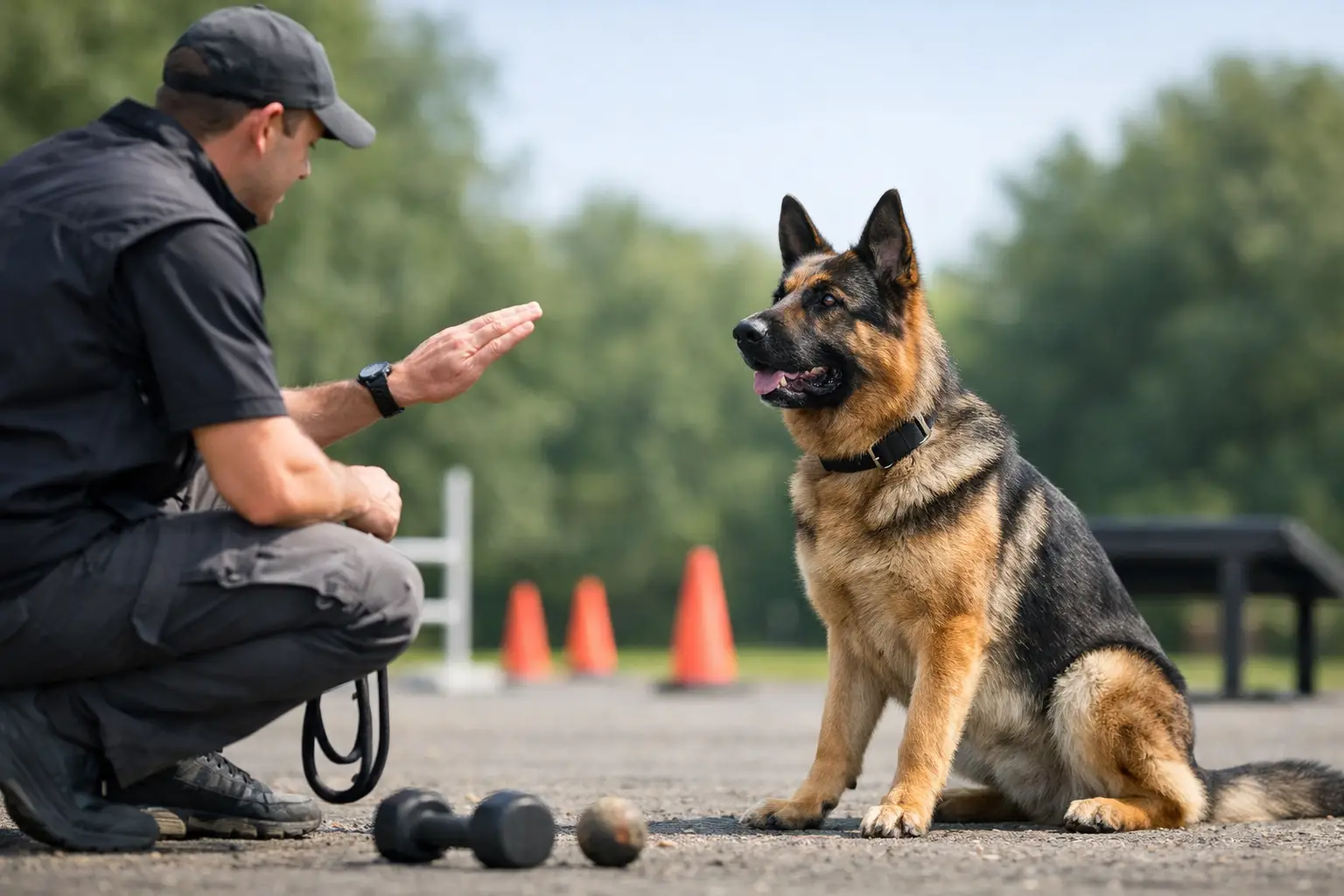
Your dog can sit in the kitchen, but ignores you at the park. He comes when called in the backyard, but not when another dog is nearby. That gap is exactly where what is advanced obedience dog training becomes relevant. It is not about teaching flashy tricks. It is about creating reliable control when life gets busy, distracting, and unpredictable.
For many dog owners, basic obedience is the starting point. Advanced obedience is what turns those early skills into practical, everyday behavior. It helps your dog listen around people, dogs, traffic, visitors, food, movement, and all the real-world pressure that makes training fall apart if the foundation is not strong enough.
What is advanced obedience dog training?
Advanced obedience dog training is the process of taking known commands and making them dependable in more difficult situations. Your dog is not just learning what sit, down, place, heel, or come mean. Your dog is learning to perform those behaviors with speed, consistency, and focus, even when there are strong distractions.
That usually includes longer duration, greater distance, higher distraction, and more freedom. A dog may be asked to hold place while guests enter, walk in a controlled heel past other dogs, come when called from across a field, or remain calm in a public setting without constant reminders.
This is where owners often realize the difference between a dog that knows commands and a dog that is trained. Knowledge alone is not enough. Reliability is the goal.
How advanced obedience is different from basic training
Basic obedience introduces the language of training. It teaches your dog the meaning of core commands and starts building structure inside the home or in low-distraction environments. That stage matters, but it is only the beginning.
Advanced obedience raises the standard. Instead of rewarding a sit in a quiet room, training now asks for that same sit when the front door opens, when another dog passes by, or when the dog would rather chase something interesting. The challenge is no longer whether the dog has seen the command before. The challenge is whether the dog can make the right choice under pressure.
That is also why advanced obedience is not reserved for competition dogs. It is highly practical for family dogs, working dogs, energetic young dogs, and even dogs with behavioral issues. A dog that can hold commands around distractions is safer, easier to live with, and more enjoyable to take places.
What skills are usually included in advanced obedience dog training?
The exact program depends on the dog, but advanced obedience usually builds on a few core behaviors. Heel becomes more precise and more useful in public. Recall becomes faster and more reliable. Place becomes longer and calmer. Sit and down include stronger duration and better responsiveness from a distance.
Many advanced programs also work toward off-leash reliability, stronger impulse control, and better neutrality around distractions. That might mean a dog can pass other dogs without lunging, ignore food on the ground, settle during family activity, or respond immediately when called away from something exciting.
Some dogs also need advanced work in areas that overlap with behavior modification. A reactive dog, for example, may need obedience that holds up when triggers appear. An anxious dog may need structure that creates clarity and confidence. In those cases, advanced obedience is not separate from behavior work. It supports it.
Why owners choose advanced training
Most owners do not start looking for advanced obedience because they want a perfect heel for its own sake. They want more freedom and fewer daily struggles. They want a dog that listens on walks, behaves around company, and can go more places without chaos.
Advanced obedience can make a major difference for busy professionals, families with children, and owners who simply want their dog to be easier to live with. It can also be the right next step for dogs that have completed puppy training or basic lessons but still fall apart outside familiar settings.
A well-trained dog is not just more obedient. That dog is often calmer because expectations are clear. The owner is more confident because communication is consistent. The relationship improves because both sides understand the rules.
What advanced obedience is not
It is not constant drilling, and it is not about making a dog robotic. Good advanced training should give your dog more clarity, not less personality. The goal is not to suppress the dog. The goal is to create reliable behavior that allows more freedom.
It is also not one-size-fits-all. A high-drive young Labrador, a stubborn Bulldog, a nervous rescue, and a reactive Shepherd may all need advanced obedience, but the path will not look exactly the same. Some dogs need more repetition. Some need confidence-building. Some need a structured system that helps the owner follow through consistently.
That is why program design matters. The best approach matches the dog, the owner, and the lifestyle the training needs to support.
What makes advanced obedience actually work
The biggest factor is proofing. Dogs do not automatically generalize skills well. A dog that downs beautifully in your living room may act like he has never heard the command when you ask for it at a brewery or neighborhood trail. That does not mean the dog is stubborn or incapable. It means the training has not been fully transferred.
Advanced obedience works by gradually increasing difficulty and reinforcing success in many environments. Trainers often work through location changes, distraction levels, duration, distance, and handler movement. The dog learns that the command means the same thing everywhere, not just in one familiar place.
Owner follow-through matters just as much. Even strong trainer-led work can fade if the owner does not know how to handle the dog consistently at home and in public. That is why the most effective programs include owner education, real-life practice, and support after the initial training phase.
Is advanced obedience right for every dog?
In some form, yes. Not every dog needs formal off-leash work or high-level public access skills, but almost every dog benefits from more reliable obedience. The level depends on your goals.
If you want your dog to stay calm when guests come over, walk politely through your neighborhood, and listen around normal distractions, advanced obedience can help. If you want off-leash freedom, strong recall, and the ability to bring your dog into busier environments with confidence, it becomes even more valuable.
Dogs with behavior issues may also need advanced obedience as part of a broader plan. Structure alone will not solve every problem, but it often creates the control needed to start changing bigger patterns. For many owners, that is the difference between managing the dog and truly improving the dog.
How training formats affect results
Advanced obedience can be taught through private lessons, day training, board-and-train programs, hybrid programs, and group reinforcement work. The right format depends on your schedule, your dog’s challenges, and how much hands-on guidance you need.
Private lessons can be a strong fit if you want to be deeply involved from the start and your dog already has a workable foundation. Day training or board-and-train can accelerate progress for busy owners or dogs that need more repetition and structure. Group classes often help with maintenance because they add distractions and reinforce skills around other dogs and people.
At Sit Means Sit Dog Training Austin, this kind of flexibility matters because advanced obedience is not just about teaching commands. It is about making sure those skills transfer into daily life.
What results should you realistically expect?
You should expect better responsiveness, stronger focus, improved manners, and more control in distracting environments. You should also expect that results depend on consistency. Professional training can build the system, but owners still play a major role in maintaining it.
The timeline varies. Some dogs progress quickly because they already have a strong basic foundation. Others need more time because distraction, anxiety, reactivity, or inconsistent past training has created gaps. Fast improvement is possible, but lasting improvement comes from repetition and clear standards.
A good trainer will be honest about those trade-offs. Advanced obedience can produce impressive change, but it works best when expectations are practical and the training is applied where real life happens.
If your dog listens only when the environment is easy, advanced obedience may be the missing piece. The goal is simple: a dog that responds when it counts, so everyday life feels more enjoyable, more manageable, and a whole lot less stressful.