
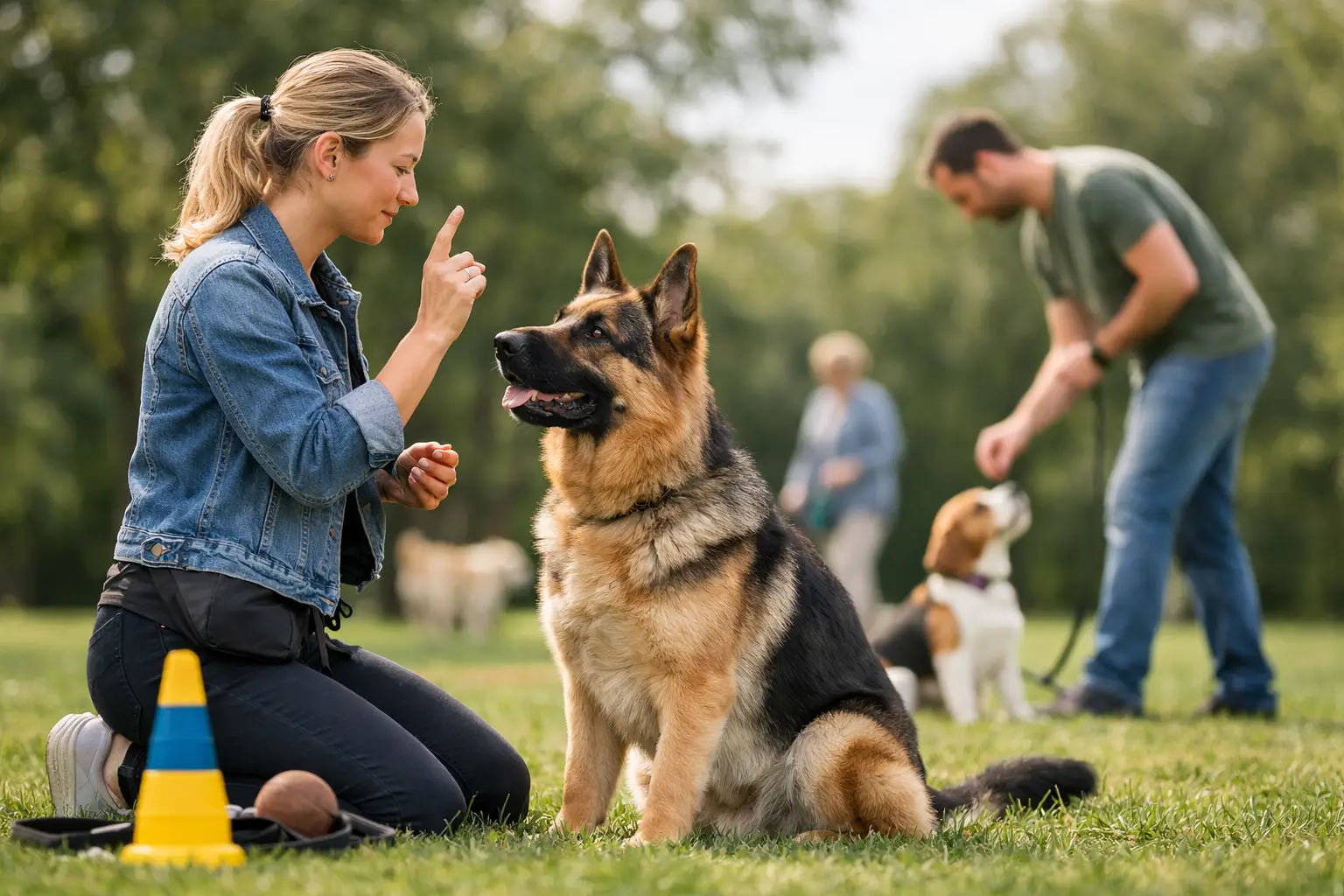
A dog that listens in your living room but falls apart on a walk is not fully trained. That is usually the moment owners start asking, what does dog obedience training teach, really? The answer is bigger than sit, down, and come. Good obedience training teaches a dog how to respond clearly under guidance, and it teaches the owner how to create that response consistently in everyday life.
That matters whether you have a brand-new puppy, an adolescent dog testing limits, or an older dog with habits you are ready to change. Obedience is not about making a dog look polished for five minutes. It is about building practical control, safer behavior, and a better relationship that holds up around real distractions.
What does dog obedience training teach at the most basic level?
At its foundation, obedience training teaches communication. Dogs do not automatically understand what we mean by good behavior, personal space, waiting politely, or coming when called. Training gives those expectations structure.
A command like sit is not just a position. It teaches the dog to pause, listen, and follow direction. A place command is not just going to a bed. It teaches steadiness, impulse control, and how to settle in the middle of household activity. A reliable heel teaches the dog how to move with you instead of dragging you from one distraction to the next.
For owners, obedience training teaches timing, consistency, and clarity. Many behavior problems are made worse by mixed signals. One day the dog jumps on guests and gets laughed at. The next day the same behavior gets corrected. Dogs do better when the rules are clear and repeatable.
Obedience teaches focus before it teaches tricks
One of the biggest changes owners notice is attention. A dog that is scanning every squirrel, every sound, and every person is hard to manage because the dog is mentally unavailable. Training teaches the dog that paying attention to the handler matters.
This is why obedience often improves more than the command being practiced. When a dog learns to check in, hold position, and wait for direction, everyday life gets easier. Walks become calmer. Doorways become safer. Guests are less chaotic. Even dogs with a lot of energy can learn to think before reacting.
That does not mean every dog will look the same. A young working-breed dog and a laid-back senior dog may both be obedient, but the training process and pacing can differ. Good training accounts for the dog in front of you instead of forcing one speed or one style on every case.
What dog obedience training teaches about impulse control
Many unwanted behaviors are impulse problems. Jumping, pulling, barking for attention, rushing doors, stealing food, and breaking commands all come from acting first and thinking later. Obedience training directly addresses that pattern.
When a dog learns to hold a sit while the front door opens, stay on place while people move around the room, or walk calmly past another dog, the lesson is bigger than compliance. The dog is practicing self-control. That skill transfers.
This is one reason structured obedience can help with behavior issues that seem unrelated at first. A dog that has better impulse control is often easier to work through distraction, frustration, and overstimulation. It is not a magic fix for every issue, especially severe fear or aggression, but it creates a stronger training foundation.
Obedience teaches dogs how to live with people
A well-trained dog is easier to include in daily life because the dog understands boundaries. That can mean greeting people without bowling them over, staying off furniture unless invited, relaxing during meals, or settling while the family is busy.
This matters for more than convenience. It affects safety and quality of life. Families with children need dogs that can handle movement and noise without adding chaos. Busy professionals need dogs that can function well even when the schedule is full. Apartment owners need dogs that are easier to manage around neighbors, elevators, and shared spaces.
Training as you live is where obedience becomes truly valuable. It is one thing for a dog to perform in a quiet session. It is another for that same dog to respond in the driveway, at the park, around guests, or during a stressful moment. Real training should prepare dogs for real environments.
Owners learn just as much as dogs do
A lot of people think obedience training is mainly for the dog. In practice, the owner education piece is what makes results last.
Owners learn how to give commands clearly, how to reinforce the right behavior, and how to avoid rewarding the wrong one by accident. They also learn when to help the dog succeed and when to hold the dog accountable. That balance matters. Too much freedom too soon creates confusion. Too much correction without proper teaching can create stress and poor understanding.
This is why professional guidance can make such a difference. The right system shortens the learning curve for both ends of the leash. It helps owners stop guessing and start handling with purpose.
Obedience training can support behavior modification
Not every dog starts with a clean slate. Some dogs come into training with reactivity, anxiety, leash frustration, fear around strangers, or patterns of overarousal. In those cases, obedience is not the whole solution, but it is often part of the path forward.
Structured commands give the dog something clear to do instead of simply reacting. A dog that can heel past a trigger, hold place when visitors enter, or come when called away from trouble is easier to redirect and safer to manage.
It depends on the severity of the issue. Serious aggression or fear needs a trainer who understands behavior modification, not just basic manners. But even then, obedience helps create consistency and control. It gives the owner usable tools instead of just hoping the dog will calm down on its own.
Puppies and adult dogs both benefit, but for different reasons
With puppies, obedience training teaches early structure. It shapes house manners, introduces leash skills, and builds habits before bad ones become ingrained. Puppies also learn how to work through distraction and settle their energy, which many owners underestimate.
With adolescent or adult dogs, the focus is often cleaner communication and breaking existing patterns. A grown dog may need to unlearn pulling, ignoring commands, jumping, or selective listening. That can take more accountability, but adult dogs can absolutely improve.
Age, breed, and past experience all influence the process. Still, the core lesson stays the same. Dogs improve when training is clear, consistent, and practiced in real life.
What results should owners realistically expect?
Obedience training should lead to better responsiveness, stronger manners, and more control in public and at home. It should reduce chaos and increase confidence for the owner. You should feel more capable taking your dog places, having people over, and managing daily routines.
What it should not promise is a perfect robot. Dogs are living animals, not machines. Reliability takes repetition, maintenance, and fair expectations. Some dogs progress quickly with basics but need more work around distractions. Others need time to build confidence before reliability shows up consistently.
The strongest programs focus on transfer. That means the dog is not only learning from the trainer. The owner is learning how to maintain the behavior after the formal training period ends. That is where long-term change happens.
Why professional obedience training often works faster
Many owners have tried videos, group classes, or advice from friends before seeking help. Sometimes those tools help. Sometimes they create more confusion because the timing is off, the method is inconsistent, or the dog needs a more structured approach.
Professional training brings assessment, customization, and accountability. A trainer can spot whether the issue is lack of understanding, lack of follow-through, overstimulation, fear, or a gap in handling. That distinction matters because the solution changes based on the cause.
For owners in Austin who want practical results, Sit Means Sit Dog Training Austin focuses on obedience that holds up in everyday situations, not just in a controlled lesson. That kind of training is what helps dogs become easier to live with and more reliable where it counts.
So what does dog obedience training teach? It teaches dogs how to listen, how to regulate themselves, and how to function successfully in the human world. Just as importantly, it teaches owners how to lead with clarity. When both sides understand the job, life with your dog gets a whole lot better.