
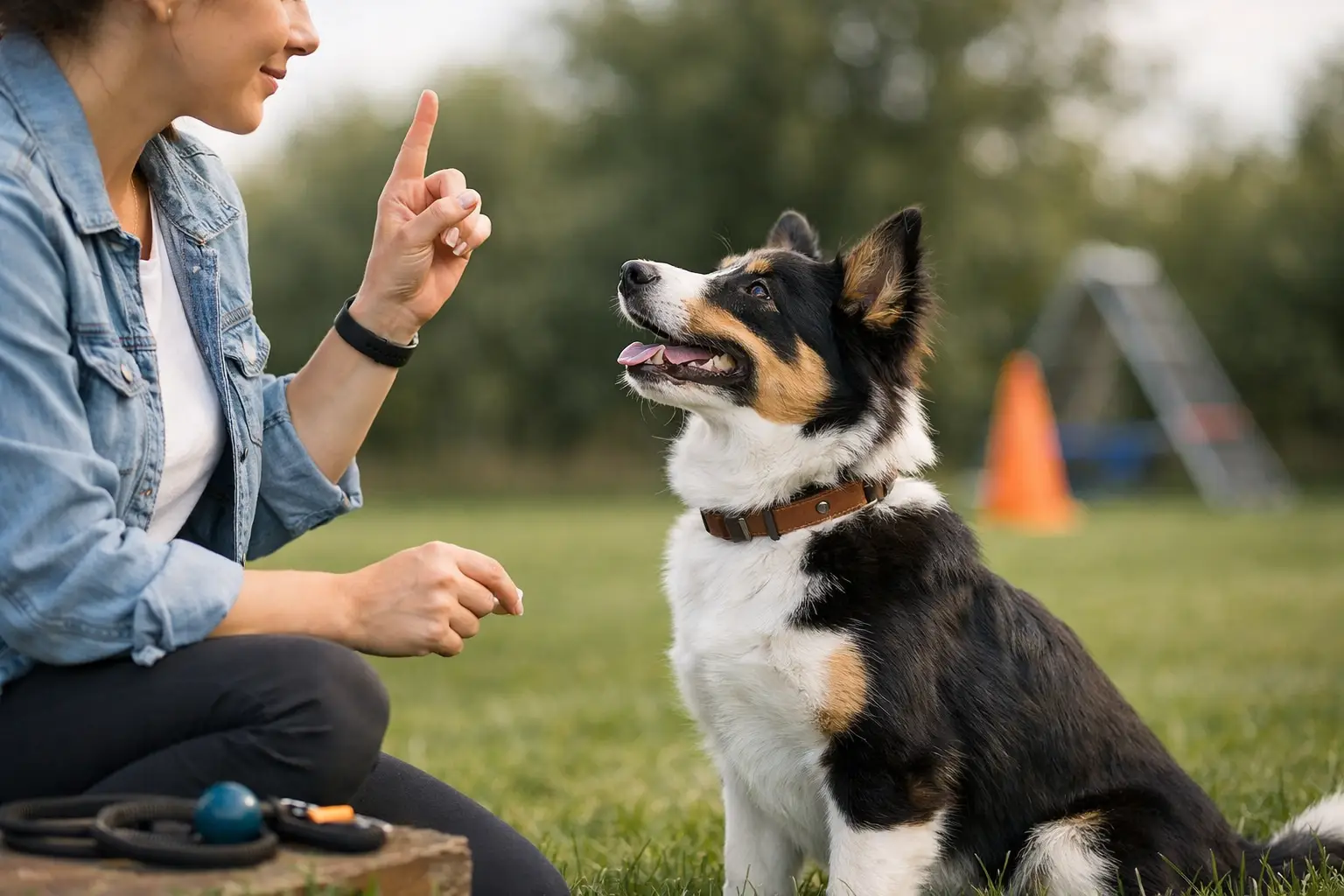
The first few days of training usually tell you a lot. Some dogs are bouncing off the walls. Some shut down in new situations. Some seem smart but only listen when there is no distraction at all. If you are wondering how to start dog obedience training, the answer is not to teach ten commands at once. It is to build structure your dog can understand and repeat every day.
That matters because obedience is not just about having a dog that can sit in the living room. It is about safety at the front door, calmer walks, better behavior around guests, and more control when real life gets messy. The best training starts simple, but it should lead to results you can actually use.
How to start dog obedience training at home
Start with a clear routine, not a pile of tricks. Dogs learn faster when expectations are consistent. If one person allows jumping, another repeats commands five times, and a third uses treats with no follow-through, your dog is getting mixed information.
Begin by choosing a few core behaviors you want every day. For most dogs, that means name recognition, sit, down, place, come, and leash walking. You do not need to perfect all of them in a week. You do need to teach them in a way your dog can understand, practice, and repeat.
Keep sessions short. Five to ten focused minutes is enough for many dogs, especially puppies or easily distracted adults. A shorter session with good timing beats a long session where your dog gets frustrated or tunes out.
Your rewards matter, but so does your clarity. Use food, praise, toys, or affection if they motivate your dog, but make sure the reward shows up at the right moment. If your dog sits, then stands, then gets rewarded, you may be rewarding the wrong thing. Timing shapes behavior.
Start with engagement before obedience
A lot of owners rush straight into commands. The problem is that obedience falls apart when the dog is not mentally with you. Before you ask for precision, teach your dog that paying attention to you is worthwhile.
Say your dog’s name once. When they look at you, mark that moment with praise or a reward. Repeat it in low-distraction environments until eye contact becomes a habit. This seems basic, but it is one of the most important pieces of early obedience training. A dog that checks in with you is easier to guide, redirect, and teach.
Engagement also means your dog learns that training is active, not optional. You are not begging for attention. You are showing your dog that following you leads to clear outcomes.
Focus on commands that improve daily life
The best place to start dog obedience training is with behaviors that solve everyday problems. Sit is useful, but only if it translates to waiting at doors, greeting guests politely, and settling before meals. Place can be a game changer for dogs that pace, jump, bark at visitors, or struggle to relax.
Come is critical for safety, but it should be built gradually. Do not poison recall by calling your dog for something unpleasant every time. Make coming to you a win early on, and practice it on leash or in controlled spaces before expecting reliability outdoors.
Loose-leash walking deserves attention early too. Pulling is one of the most common frustrations for owners, and it usually gets worse when dogs rehearse it daily. If your dog learns that tension on the leash still gets them where they want to go, pulling becomes the system. Good leash work starts with slowing down, resetting often, and rewarding the position you want.
Use repetition, but do not become predictable
Dogs need repetition, but they also need proofing. A dog who sits in the kitchen may not sit in the driveway, at the park, or when another dog passes by. That does not mean your dog is stubborn. It means dogs do not generalize well without help.
Practice in stages. Start inside with minimal distraction. Then move to the backyard, the front yard, the sidewalk, and eventually busier environments. Raise difficulty gradually. If performance drops, you moved too fast.
This is where many owners get discouraged. They think the dog knew it yesterday, so the dog should know it everywhere. Real obedience is not about one successful rep in a quiet room. It is about being able to respond around movement, noise, people, food, and excitement.
Correcting mistakes without creating confusion
Training should be clear, not harsh. Your dog needs to understand both what earns rewards and what does not work. If you repeat commands over and over while your dog ignores you, you teach them that your first few cues do not matter.
Give the command once. Help your dog follow through if needed. Then reward the correct behavior. That sequence teaches accountability without turning training into a fight.
What that looks like depends on the dog. A young puppy needs a lot of guidance and management. An older dog with established bad habits may need a more structured approach. A fearful or reactive dog needs training that builds clarity without adding pressure at the wrong time. This is where one-size-fits-all advice falls apart. Good training is consistent, but it is not careless.
Why environment matters so much
If your dog cannot focus, the setup may be the problem more than the dog. Training in a crowded park is not a badge of honor if your dog has no foundation yet. Set your dog up to succeed first, then add challenge.
That means using the right leash, enough space, and the right level of distraction. It also means paying attention to your dog’s energy. Trying to teach a brand-new skill when your dog is over-aroused, under-exercised, or mentally flooded usually leads nowhere.
There is a balance here. You do not want to avoid the real world forever, because obedience has to transfer into daily life. But you also do not want to throw your dog into situations they are not prepared for. Progress comes from controlled exposure, not chaos.
When to get professional help
Some owners can build a solid foundation on their own. Others need a coach, and that is not a failure. It is often the fastest path to results, especially if the dog is strong-willed, reactive, anxious, aggressive, or simply inconsistent despite your effort.
Professional training is also valuable for busy families and working professionals who want a clear system instead of guessing. The right program can save months of frustration by showing you how to communicate, how to reinforce, and how to handle real distractions correctly.
At Sit Means Sit Dog Training Austin, that is a major part of the process. Training is built around real life, not just clean reps in a controlled room. Whether a dog needs private lessons, day training, board-and-train support, puppy development, or behavior work, the goal is the same – practical obedience the owner can maintain.
What realistic progress looks like
A good first week of training is not perfection. It is better engagement, clearer communication, and a dog who is beginning to understand the rules. A good first month may include stronger leash manners, more reliable basic commands, and fewer chaotic moments at home.
Long-term obedience comes from layering skills over time. First your dog learns the command. Then your dog learns to do it with duration. Then with distance. Then with distraction. Then in different places and around real-life triggers.
That process takes consistency, but it works. Age, breed, and history all influence the pace, yet every dog can improve when the training is structured and the owner follows through.
The biggest mistake to avoid
The biggest mistake is waiting until behavior becomes a daily battle before starting. Jumping, pulling, ignoring commands, barking at guests, and blowing off recall rarely fix themselves. Dogs do what works for them, and repeated behavior becomes habit.
Start earlier than you think you need to. Start with simple expectations. Be fair, be consistent, and make sure your dog understands what you are asking before you raise the stakes.
If you want to know how to start dog obedience training the right way, think less about teaching commands and more about building a system. Dogs thrive on clarity. When they know what is expected and you follow through every time, training stops feeling like guesswork and starts becoming part of everyday life.
The dog you want is usually on the other side of structure, repetition, and the right guidance.