
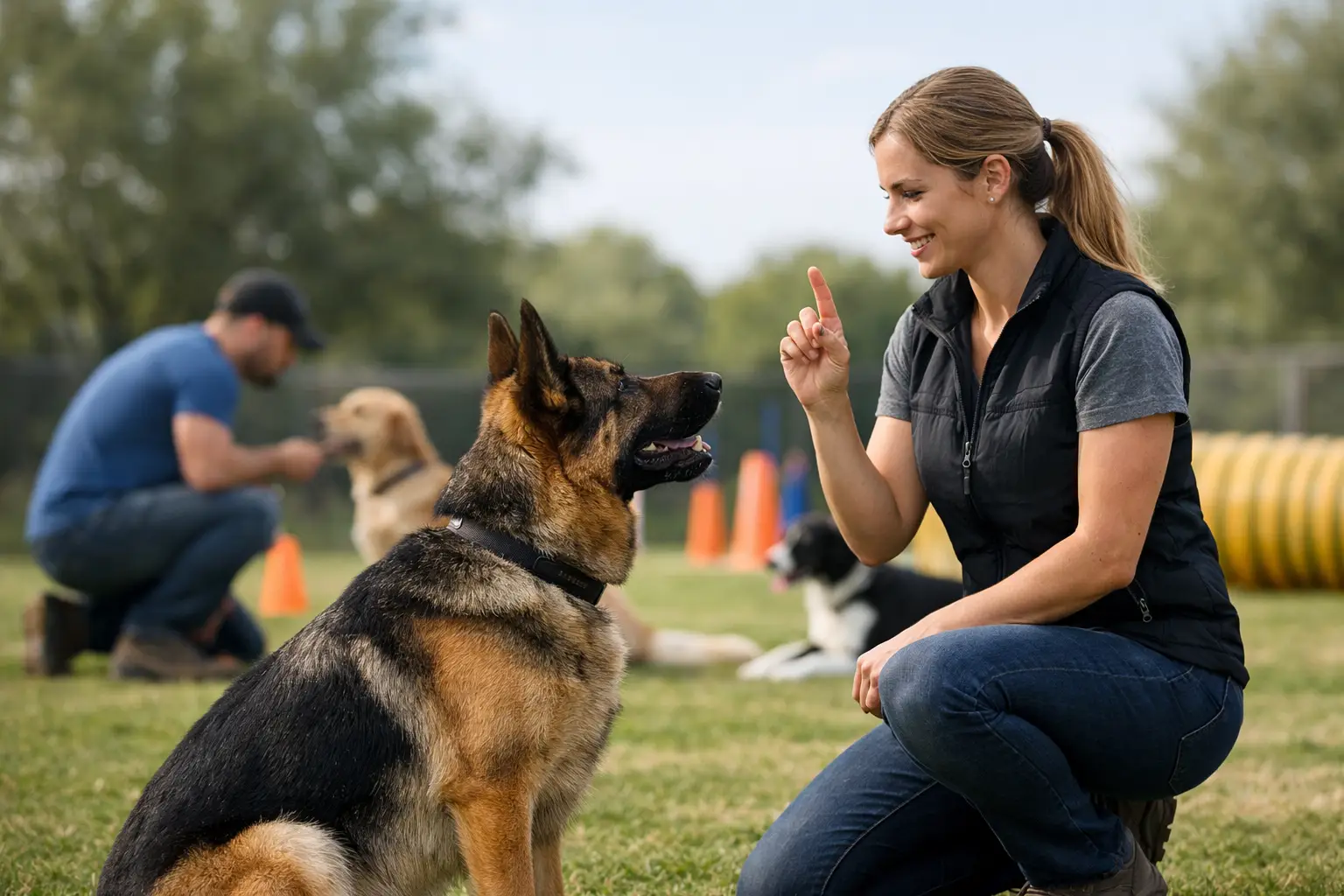
Some dogs look great in the living room and fall apart the second you open the front door. They jump on guests, drag you down the sidewalk, ignore recall, or lose focus the moment another dog appears. That is exactly why dog obedience training classes matter. Good training is not about getting a perfect sit in a quiet room. It is about building reliable behavior you can actually use in everyday life.
For many owners, the biggest frustration is not a lack of effort. It is inconsistency, confusion, or using a training approach that does not match the dog in front of them. A puppy needs structure early. A distracted adolescent needs follow-through. A reactive dog needs a plan that goes beyond basic manners. The right class can create progress fast, but only if it is built around real results instead of generic group instruction.
What dog obedience training classes should actually teach
At a basic level, obedience training should cover core commands such as sit, down, place, come, heel, and stay. But the real value is not the command itself. It is the dog learning how to respond around distractions, in new places, and under pressure. A dog that listens only when the environment is easy is not truly trained.
That is where many owners get stuck. They assume their dog knows the behavior because it happens occasionally at home. Then the dog ignores them at the park, in the neighborhood, or when visitors arrive. Strong classes close that gap by training for reliability, not just repetition.
That also means owner education has to be part of the process. Dogs do better when handlers understand timing, leash handling, clear communication, and how to reinforce the right choices. Training should not feel mysterious. You should leave class knowing what to do, why it works, and how to carry it into daily routines.
Not all dog obedience training classes are built the same
This is where expectations matter. Some classes are best for social exposure and foundation work. Others are designed for serious behavior change and advanced control. Neither is automatically better. It depends on your dog, your goals, and how quickly you need improvement.
A young puppy with no major issues may do well in a class that focuses on early engagement, confidence, marker training, and household basics. An adult dog that pulls hard on leash, bolts through doors, and ignores commands in public may need a more structured program before group classes become productive. A dog showing aggression, fear, or severe reactivity usually needs individualized work first. Putting that dog into a standard class too early can slow progress instead of helping it.
That is why a one-size-fits-all promise should raise questions. Good trainers assess the dog, the owner, and the environment before recommending a program. The best path is not always the cheapest or the fastest. It is the one that gives you a realistic way to get lasting control.
When group classes make sense
Group classes can be extremely valuable when the dog is ready for them. They add distractions in a controlled setting, which helps dogs learn to focus around people, movement, and other dogs. That matters because obedience is rarely tested in perfect silence.
They also help owners practice under coaching instead of guessing at home. Small handling mistakes are common. Tightening the leash at the wrong time, repeating commands, rewarding too late, or allowing inconsistency can all muddy the training. In class, those mistakes can be corrected before they become habits.
For many families, group classes are also a smart way to maintain progress after private or immersive training. The dog learns that commands still apply in different settings, not just with one trainer or in one room. That reinforcement is often the difference between short-term improvement and real lifestyle change.
When private training or day training is the better fit
Some owners know exactly what they need. Their schedule is packed, their dog is strong or difficult to manage, or the behavior problem is too disruptive to wait through a slower learning curve. In those cases, dog obedience training classes alone may not be enough at the start.
Private lessons give you targeted help with your specific dog, home setup, and goals. Day training can be a strong option for busy professionals who want expert reps built into the week while still learning how to handle the dog themselves. Board-and-train or hybrid programs can make sense when owners need a bigger reset, faster momentum, or help with more serious behavior issues.
There is no trophy for doing training the hardest way possible. What matters is getting the dog reliable and giving the owner the skills to maintain that progress. Sometimes that starts in a group. Sometimes it starts with more hands-on support.
How to tell if a class will help your dog
A good training program should be clear about what it teaches, who it is for, and what happens after the class ends. If the description is vague, that is a problem. Owners need to know whether the class is focused on puppy development, basic obedience, advanced reliability, distraction work, behavior rehab, or maintenance.
You should also look at whether the training is designed for real life. Can the dog perform the behavior outside the classroom? Is there a plan for distractions, public settings, guest greetings, leash manners, and everyday household expectations? If training stays too theoretical, owners often end up with a dog that graduates class but still causes stress at home.
Support matters too. Dogs do not improve because they attended a few sessions. They improve because the training is reinforced consistently, with coaching that helps the owner stay on track. Programs that include follow-up, group reinforcement opportunities, or ongoing trainer access tend to produce stronger long-term results.
What results-driven obedience looks like
Results-driven training is not about flashy tricks. It is about control, clarity, and freedom. Your dog should be easier to walk, easier to take in public, calmer around guests, and more responsive when it counts. That may mean loose-leash walking through the neighborhood, holding place while the door opens, coming when called, or staying neutral around distractions.
For some dogs, it also means behavior modification layered on top of obedience. A reactive dog, for example, often benefits from clear obedience because structure reduces uncertainty and gives the owner a practical way to interrupt escalation. Obedience is not a magic fix for every behavior issue, but it is often a critical part of the solution.
The timeline depends on the dog. Puppies often learn quickly but need ongoing maturity and repetition. Adult dogs with bad habits can improve fast when the rules become consistent. Dogs with fear, aggression, or long-standing reactivity usually need more patience and a more customized plan. Progress is possible, but honest expectations matter.
Why owners get better outcomes with the right system
A lot of dog owners have already tried something before they call a professional. They watched videos, took casual advice from friends, bought tools they were not sure how to use, or attended a class that felt disconnected from their real problems. The issue usually is not that the dog cannot learn. The issue is that the system was incomplete.
Reliable obedience comes from a combination of repetition, accountability, timing, fair expectations, and trainer guidance. It also has to fit your life. If the program does not translate to your schedule, your home, your kids, your routines, and your dog’s specific triggers, it will be harder to maintain.
That is why a training-as-you-live approach works so well. It closes the gap between practice and reality. The dog does not just learn commands. The dog learns how to live with structure, and the owner learns how to lead clearly in normal daily situations. That is where confidence starts to build on both ends of the leash.
At Sit Means Sit Dog Training Austin, that practical outcome is the point. Training should make life easier, safer, and more enjoyable, not just give you a few good moments in class.
Choosing the right next step
If your dog is young, distracted, stubborn, overly excited, or simply not listening the way you need, professional training can save months of frustration. If your dog has more serious issues such as reactivity, fear, aggression, or anxiety, choosing the right level of support becomes even more important. The best program is the one that matches the dog in front of you and gives you a clear path forward.
A strong class or training program should leave you with more than hope. It should give you visible progress, practical handling skills, and a dog that can function better in the real world. When that happens, daily life changes fast. Walks feel easier. Guests feel less stressful. Public outings become possible. And your dog starts hearing you the first time, not the fifth.
If you are considering dog obedience training classes, look for structure, experience, and a plan built for real life. The right training does more than teach commands. It gives you back confidence in your dog and confidence in yourself.