
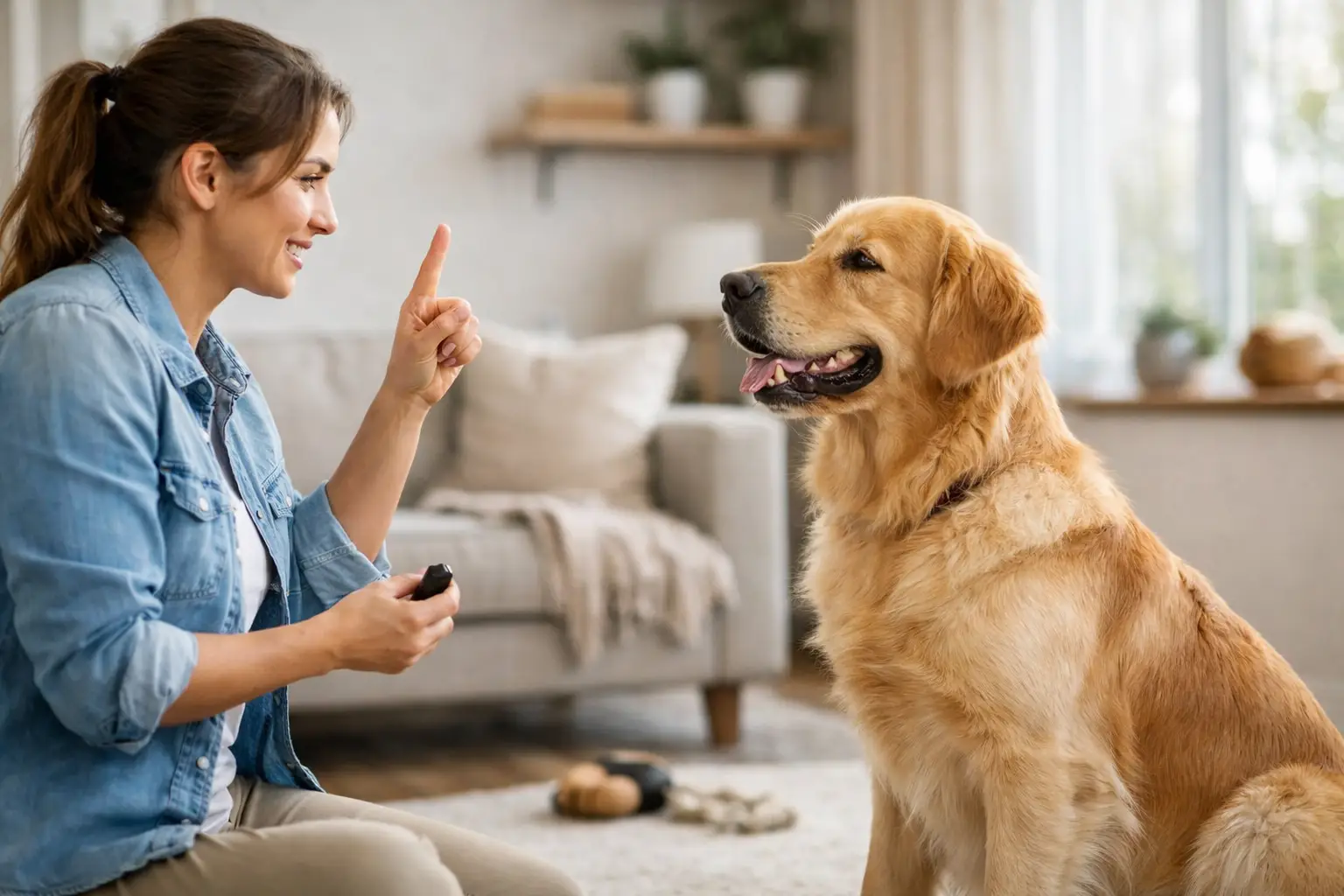
Your dog probably knows how to listen – just not in the moments that matter most. That is why dog obedience training at home can feel frustrating for good owners who are putting in real effort. One day your dog sits perfectly in the kitchen. The next day he ignores you in the yard, jumps on a guest, or acts like he has never heard his name before.
That does not mean your dog is stubborn, dominant, or incapable. It usually means the training is incomplete, inconsistent, or too disconnected from real life. Good home training is not about teaching commands in a quiet room and hoping they hold up everywhere else. It is about building clear communication, consistent follow-through, and reliable behavior in the places you actually live.
What dog obedience training at home should actually accomplish
At-home training should do more than produce a few tricks. The real goal is control, responsiveness, and better daily behavior. For most families, that means a dog who can walk without dragging you down the street, settle instead of pacing, come when called, hold place when people come over, and respond even when something more exciting is happening nearby.
That is where many owners get stuck. They reward a behavior a few times, the dog seems to understand it, and then they assume the lesson is finished. It is not. Dogs do not generalize well on their own. A sit in the living room is not the same as a sit at the front door, in the driveway, or near another dog.
If you want dog obedience training at home to work, you need repetition in different environments, clear expectations, and enough structure that your dog cannot keep practicing the wrong behavior.
Start with structure before commands
Most obedience issues are not just command issues. They are lifestyle issues. If your dog is overexcited, under-exercised, constantly self-rewarding, or allowed to ignore you half the time, adding more verbal commands will not solve much.
Start by tightening up daily routines. Feed on a schedule. Ask for a simple behavior before meals, before going outside, and before getting attention. Use the leash indoors if your dog is wild, pushy, or difficult to interrupt. Limit free roaming if it leads to accidents, counter surfing, barking at windows, or rehearsing bad habits.
This is not about being harsh. It is about creating clarity. Dogs do better when the rules are easy to understand and consistently enforced.
The core skills to teach first
Most dogs do not need twenty commands. They need a handful of reliable ones that make everyday life easier and safer.
Sit is useful because it teaches your dog how to pause and focus. Down helps create calm. Place gives your dog a clear job when guests come over, food is being prepared, or the house feels hectic. Come is critical for safety. Heel or loose-leash walking matters because pulling is one of the most common daily frustrations. A solid break or release command also matters because it tells your dog when the exercise is complete.
These basics sound simple, but the standard matters. A command is only useful if your dog understands it, performs it promptly, and can do it with distractions. That takes more than a few treats and a good mood.
Focus on timing, not just repetition
A lot of owners repeat commands because they think more words equal more clarity. Usually it does the opposite. If you say sit five times before your dog responds, your dog is learning that the first four do not matter.
Give the command once. Help your dog succeed. Reward the right decision at the right moment. Then repeat the exercise, not the word. Clean timing speeds up learning. Sloppy timing creates confusion.
The reward matters too, but not every dog is motivated by the same thing in the same setting. In a quiet room, kibble may be enough. In the front yard with squirrels, you may need a much more meaningful reward or stronger accountability. It depends on your dog, the environment, and the level of distraction.
Why home training often falls apart outside the house
The biggest mistake in dog obedience training at home is thinking the house is the finish line. It is the starting point.
Dogs learn in layers. First they understand the task. Then they learn to do it consistently. Then they learn to do it around distractions, in new places, and under real-life pressure. That last stage is where dependable obedience is built.
If your dog listens in the kitchen but not on a walk, that is not unusual. It just means the behavior has not been fully proofed. Move from low distraction to moderate distraction to real-world distraction. Practice in the backyard, driveway, neighborhood, and around visitors. Change the picture while keeping the expectation the same.
This is one reason professional coaching helps so much. Owners often know what they want their dog to do, but not how to build that response in a way that transfers into everyday life.
Common mistakes owners make at home
Most training problems are fixable, but only if you are honest about what is happening. One common issue is inconsistency. If jumping is corrected one day and laughed at the next, your dog is getting mixed information. Another is moving too fast. Owners often add distance, duration, and distraction all at once, then wonder why the dog falls apart.
There is also the problem of accidental reinforcement. If barking gets attention, rushing the door gets access, or pulling gets the walk moving, the dog is being rewarded for behavior you do not want. Dogs repeat what works.
Then there is underestimating the dog in front of you. Some dogs need basic guidance and a plan. Others are dealing with anxiety, reactivity, fear, or serious overarousal. Those cases need more than DIY advice. They need a training system that matches the behavior problem.
When at-home obedience is enough, and when it is not
Home training can absolutely build strong results, especially for puppies, mild manners issues, and owners who are consistent. If your dog is generally social, food motivated, and not showing major behavioral problems, you may be able to make excellent progress with the right routine and coaching.
But some situations call for professional support sooner rather than later. If your dog is showing aggression, severe leash reactivity, intense fear, separation issues, or zero responsiveness once distractions appear, do not wait until the behavior is deeply ingrained. The longer a dog rehearses a problem, the harder it is to change.
That does not mean you have failed. It means the stakes are higher and the training needs to be more structured. Professional help can save time, reduce stress, and make the process safer for everyone involved.
A better way to think about obedience at home
The best training does not live in a formal session only. It shows up in how your dog exits the crate, waits at doors, walks through the neighborhood, settles during dinner, and responds when life gets busy.
That is the standard we believe in at Sit Means Sit Dog Training Austin. Training should work where you live, not just where you practice. Whether a dog needs puppy development, basic obedience, advanced off-leash work, or behavior modification, the goal is the same – lasting control that makes everyday life easier.
For owners, that means your role matters. Even if a trainer does a significant part of the teaching, long-term success still depends on follow-through at home. Dogs thrive when the people handling them understand the system, use it consistently, and know how to guide the dog through real situations.
How to make your home sessions more effective
Keep sessions short enough that your dog can stay engaged. End before your dog checks out. Train when you can actually focus, not while multitasking. Use clear markers and rewards. Be fair, but do not negotiate with known commands.
Most of all, train with purpose. Do not run through commands just to say you trained. Work on the behavior that would improve your actual life this week. Maybe that is place while the kids come in from school. Maybe it is leash manners before your morning walk. Maybe it is a reliable recall in the yard.
That practical focus is what gets results. Not random drills. Not endless treats with no follow-through. Real training changes daily patterns.
A well-trained dog is not a different dog. It is the same dog with clearer boundaries, better habits, and more reliable communication with you. Start there, stay consistent, and if progress stalls, get experienced help before frustration becomes the routine.